-teach your child study technique and the ability to concentrate
In a growing knowledge society we need to get better at taking in information, but also to sort out what is unimportant. At the same time the information flow interrupts us in our concentration. It becomes a paradox since the professions of the future demand a good ability to focus.
This lecture brings forward the importance of being able to focus, what advantages it gives and how we can teach our children to become better at it. When our children learn to focus on the right things and resist distractions, they get advantages both for their health and schoolwork. They get more efficient, less stressed and better prepared for the future work market.

-parenting that results in wellbeing for both parents and children
-parenting that results in wellbeing for both parents and children

-through the right environment and conditions
What is creativity? How can we support those who do not think they are creative? By broadening our view we can better see that all children have different talents and strengths. Our mission is to help every child discover his or her abilities and create a culture where faults and mistakes are sees as natural steps towards development.
Malin presents exciting examples of how creativity has arised and how we create favourable conditions to encourage both our own and our children’s creativity. She shows why it is good for children to practice being bored and what positive effects it can have for their fantasy.

-how to talk so that the children listen and listen so that the children talk
Do you want to become more clearly in your communication? Malin teaches you how you avoid nagging and instead get children who listen. She also tells you how to set limits respectfully and kindly and hold on when you say no. The advices can not only be used in relation to your children but also to improve the conversations with your coworkers or your partner.
Malin proceeds from the research within leadership and communication and applies it to the relation to our children. She gives concrete examples of both successful communication and less successful in order to create aha-experiences. At the same time she shows that a large part of communication lies in the preparatory work.

-the importance of emotional intelligence for leadership and interaction.
Emotional intelligence, EQ, is one of the most important leadership skills in order to communicate and interact with others. Unlike IQ, which primarily is seen as an ability we are born with, EQ is mainly developed through interaction with the environment.
EQ consists of several different parts: self-awareness, self-control, empathy and social ability. Malin talks about how the different parts can be strengthened and what advantages that results in. When we understand not only our own but also our counterpart’s needs and actions, the conditions for interaction, communication and tolerance improves. EQ thereby contributes to set the ground for a democratic society.

-without rewards, punishments, bribes or threats
The lecture clarifies what research shows that we need in order to feel motivated and believe in our ability. Most of us are aware of that punishments do not create motivation, but the message that also rewards should be avoided needs more attention. It is easy to believe that rewards challenge and result in children making more efforts, but studies show that it is the other way around. Malin explains the difference between consequences and punishments and between internal and external motivation. She talks about long-term approaches which help our children find their own pleasure and drive.

How do we stimulate our children’s delight to learn? Which abilities, mental, practical and social, can be good to have by the start of school and how do we practice them with our children? How can we support the anxious and timid children and strengthen their self-confidence? The answer to these and many other questions are given during the lecture.
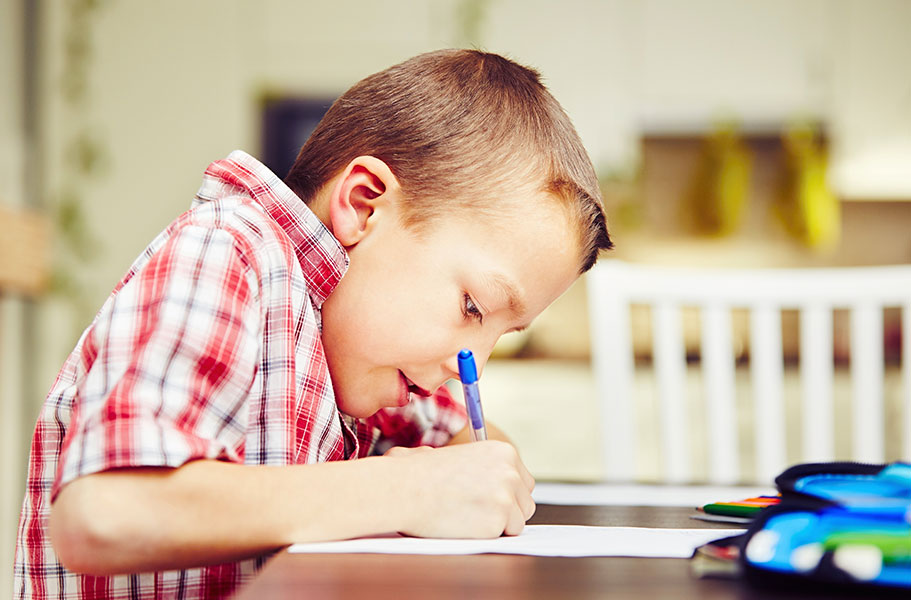
Malin also talks about the advantages and difficulties in our ability to focus in today’s society and how we can teach our children to get better at it. When the children learn to focus on the right things and resist distractions it is beneficial both for their health and schoolwork. They get more efficient and less stressed.
-make it easy to make the right choices through good conditions
Nudging is about how we easily can pay attention to and change behaviors in a desired direction. The Nobel Price in economy 2017 was awarded Professor Richard Thaler for his ideas about nudging. Now the application is spread to more areas such as health, politics and environment.
During the lecture we get to hear about how the concept of nudging nowadays is applied both in funny and successful ways within many different branches. Malin shows examples of how we can make it easy to make the right choice and a bit harder to make the wrong one. Thereby we can avoid traps of old habits and instead create new more desirable, ones more both for ourselves and for our children. By nudging, instead of rewarding or punishing, we create better conditions for a long-term well-being.